 Milometry
Intelligent speed assistance: the speed limiter in every new European car, and why Britain is next
Since July 2024 every new car sold in the EU has had to know the speed limit and tell you when you pass it. Britain has now said it will follow. What the system does, what it does not, and how to switch it off.

Allgemeine Information, keine Beratung. Als allgemeine Information verfasst und nach unserem Wissen korrekt am 19. Oktober 2026. Gesetze ändern sich, und wie sie gelten, hängt vom Einzelfall ab. Dies ist keine Rechtsberatung: Prüf die offiziellen Hinweise oder frag eine Anwältin oder einen Anwalt, bevor du dich darauf verlässt.
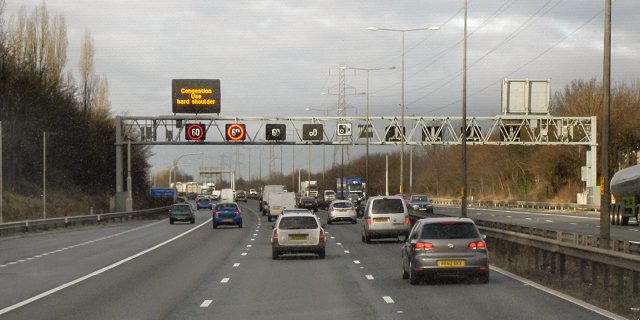
Buy a new car anywhere in the European Union and it will know the speed limit. Go over it and the car will tell you, by a chime, a buzz, a stiffer accelerator pedal or by easing off the power itself. That has been the law for every new car registered in the EU since 7 July 2024, and Great Britain has now said it will do the same.
The system is called intelligent speed assistance, ISA for short. It is the piece of the European rules that gets the headlines, usually under the word "limiter", which is half right.
Where the rule comes from
ISA is one of a set of driver assistance systems required by the EU's General Safety Regulation, Regulation (EU) 2019/2144. The requirements applied first to new vehicle types from July 2022, then to every new vehicle sold in the EU from 7 July 2024.
The European Commission lists what that means for all new motor vehicles:
- intelligent speed assistance
- reversing detection, by camera or sensors
- a warning for driver drowsiness and inattention
- an emergency stop signal, the flashing brake lights under hard braking
Cars and vans also have to carry lane keeping, automated emergency braking and an event data recorder. Lorries and buses add blind spot and tyre pressure systems of their own. The Commission expects the package to save more than 25,000 lives and avoid at least 140,000 serious injuries by 2038.
The rule applies to vehicles when they are new. A car registered before the dates above does not have to be fitted with anything.
What ISA actually does
The detail sits in a second piece of law, Commission Delegated Regulation (EU) 2021/1958, which sets out how the system must behave. Three points matter to a driver.
It works from the car's own reading of the limit. The regulation talks about the speed limit as the system perceives it. Where the car has misread a sign, or the limit has changed and the data has not, ISA will be wrong with complete confidence. The driver remains responsible for the limit actually in force.
It warns or it intervenes, and the manufacturer chooses which. The regulation allows several kinds of feedback, treated as comparable:
| Type | What you notice |
|---|---|
| Visual plus cascaded acoustic | A symbol, then a chime that becomes more insistent |
| Visual plus cascaded vibration | A symbol, then a buzz through the car |
| Haptic pedal | The accelerator pushes back against your foot |
| Speed control | The car reduces power to hold you at the limit |
None of them applies the brakes. Where the car limits power, the driver can override it by pressing the accelerator deliberately, harder or further than normal. The regulation is specific that a full kick down alone is not the override it has in mind.
You can switch it off, but it comes back. The driver may turn ISA off, fully or in part, and a constant light shows when it is off. Every time the car is started it switches itself back on. Turning it back on must not take more steps than turning it off did. Switching it off is a choice made trip by trip, never a setting the car remembers.
So a "limiter" is the wrong word for most cars. In the majority it is a warning that can be overridden, ignored or turned off for the trip, and a speed cap only where the maker has chosen the speed control option.
Britain is following
Great Britain left the EU type approval system and the General Safety Regulation did not take effect there. Northern Ireland is different: the EU requirements apply there under the Windsor Framework, so a new car registered in Belfast already has to meet them.
That gap is closing. In January 2026 the Department for Transport consulted on making manufacturers fit a package of safety technologies to qualify for GB type approval, and its response, last updated on 16 July 2026, says it will go ahead with 18 of them. ISA is on the list, alongside distraction and drowsiness warnings, emergency braking for vehicles, pedestrians and cyclists, emergency lane keeping, the emergency stop signal, reversing detection, tyre pressure monitoring and an event data recorder. It decided not to require an interface for alcohol interlocks, for now.
The timing runs from the day the legislation comes into force, which has not been fixed:
- new vehicle types: 12 months after
- all newly registered complete vehicles: 24 months after, with direct vision and the event data recorder at 36 months
The government gives its reason as aligning safety standards between Great Britain and Northern Ireland. Until the law lands, whether a new car in Britain has ISA is the manufacturer's choice, so check the specification rather than assuming either way.
The rest of the world
The General Safety Regulation is European. It applies to the EU member states Milometry covers (Germany, Austria, Belgium, Spain, the Netherlands, France and Ireland) and, through the Windsor Framework, to Northern Ireland. It does not apply in the United States, Canada, Australia, New Zealand or Japan, each of which sets its own vehicle standards. A car built for those markets may have a speed sign reader, but it is a feature there rather than a requirement.
What it changes for a business driver
For a mileage claim, nothing. Every rate system Milometry supports pays per mile or per kilometre of business driving, never by speed. HMRC's approved rate is 55p a mile for the first 10,000 business miles in the tax year and 25p after that, for journeys from 6 April 2026, whether the car beeped at you or not.
For running costs, a little. Speed is one of the biggest levers on fuel consumption, which we look at in what speed costs in fuel. A car that nags at every limit nudges a driver toward the cheaper end of that curve.
Two things are worth being clear about, because they are often confused.
The event data recorder is not a mileage log. It is triggered by a collision and keeps a short window of data from just before, during and just after it. It does not record where you went, why you went or how far, which is what a tax authority asks a log to show. See what a mileage log must prove.
ISA does not report you. The system acts inside the car. Nothing in the regulation sends your speed to the police, an insurer or an employer. Telematics boxes and fleet tracking are a separate thing, fitted by choice.
Sources
- Mandatory drivers assistance systems expected to help save over 25,000 lives by 2038 (European Commission, 5 July 2024)
- Regulation (EU) 2019/2144, the General Safety Regulation (EUR-Lex)
- Commission Delegated Regulation (EU) 2021/1958 on intelligent speed assistance (EUR-Lex)
- Mandating vehicle safety technologies in GB type approval: government response (Department for Transport)
- Increasing mileage rates (HMRC policy paper)
General information, not legal or tax advice. Vehicle standards and their dates change: check the current rules with the authority for the country where the car is registered.